 Call us: (905) 366 9700
Legal Blog
Contributory Fault
Everyone knows about contributory negligence. The Negligence Act (s. 3) spells it out. In an action founded on the negligence of a defendant or group of defendants, if a plaintiff’s negligence contributes to the damages that the plaintiff incurs, then the court is to apportion the damages among all parties, including the plaintiff. But what happens if the action is not based on negligence; rather, it is based on a breach of contract? This was the crucial issue in Arcamm Electrical Services Ltd. v. Avison Young Real Estate 2024 ONCA 925.
The Problem
A sudden electrical failure caused a complete power outage at the owner’s property. The owner, through its property manager, hired the electrical contractor to restore power to the property on an emergency basis. The contractor de-energised the two semi-fried transformers, removed them from the grid, stored them in the electrical room of the property, and installed temporary generators to restore power. The parties had hoped that the electrical contractor would be able to replace the damaged electrical switchgear and thus make the transformers usable again.
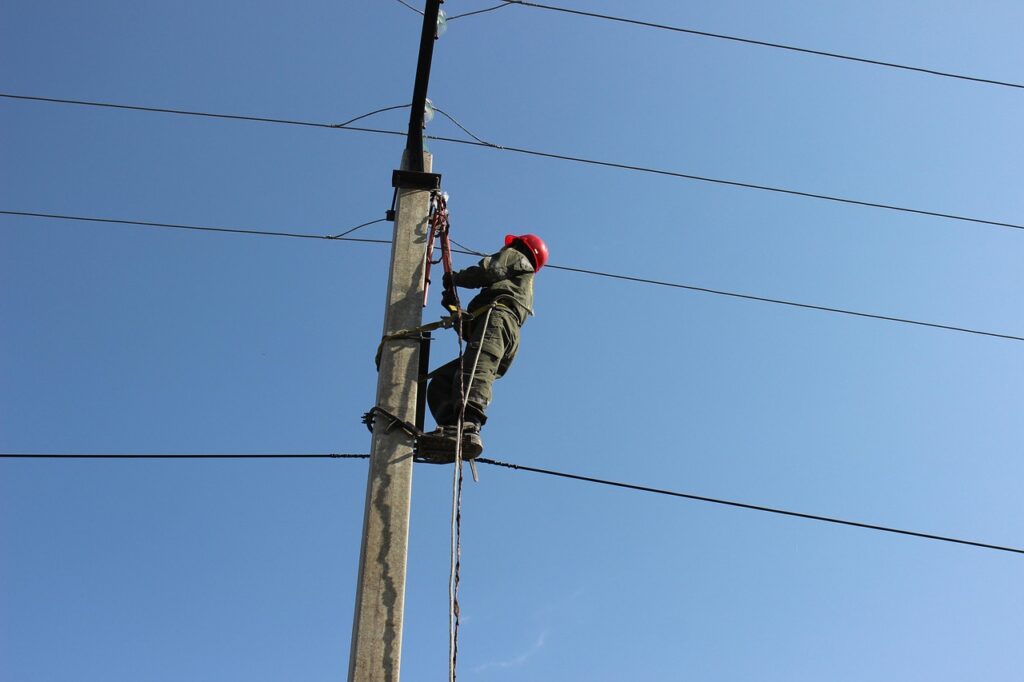
The contractor attempted to do so. However, when it tested the transformers three months later, they failed to meet the requisite standard for re-energization. Accordingly, after two more months, the contractor supplied and installed replacement transformers. The contractor moved the original transformers into storage and began to pay storage fees.
The owner paid the contractor approximately $700,000 for its initial services – after receiving payment from the owner’s insurer. At one point, however, the insurer received reports that questioned liability for the incident and the damages associated with allegedly improper storage of the transformers. The insurer therefore stopped paying the owner and the owner stopped paying the contractor.
The Actions
The contractor sued the owner for its unpaid invoices. The owner alleged that the contractor failed to investigate properly the presence of water and moisture that had caused the incident, and then failed to protect the de-energised original transformers in the electrical room when environmental conditions included high humidity levels and possible dust contamination. This was the contributory fault defence.
To complicate matters:
- the owner sued the insurer for a declaration that the owner was entitled to payment from the insurer for all amounts for which the owner might be found liable for the remedial work arising from the damage to the original transformers, and
- the insurer, by way of a subrogated claim issued in the owner’s name, sued others, asserting that one or more of them caused the original power outage, and joined the contractor, alleging that it damaged the original transformers while de-energising them. It claimed that the contractor failed to take measures to preserve and maintain the original transformers when it was performing the repairs and remediation and, in particular, exposed them to humidity, moisture, or other environmental conditions while de-energising them.
Motion
The contractor moved for summary judgment on all issues raised in its action against the owner. The owner argued that it should not be required to pay the contractor’s invoices until (i) the contributory fault defence had been decided and (ii) a court determined and apportioned liability for the damages suffered because of the alleged negligent storage. In essence, it argued that there were genuine issues for trial and that granting the motion would risk inconsistent and contradictory findings with the insurer’s subrogated claim.
The motion judge held that there was no genuine issue for trial. She found that:
- the owner had enjoyed the benefit of the contractor’s services and materials, thereby allowing the owner to continue its business and meet its obligations to its tenants;
- it was at the owner’s request that the contractor supplied the owner with temporary generators, and provided the replacement transformers;
- the owner should assume payment of those costs while it was engaged in its dispute with its own insurer as to what expenses the insurer should cover; and
- ordering the owner to pay the contractor’s invoices had no bearing on whether the contractor had any liability to the owner for damages to the original transformers because she had made no determination of that matter.
The owner appealed to the Ontario Court of Appeal.
Fault
The contractor had argued, and the motion judge had accepted, the concept that the owner could raise the contributory fault defence only by way of counterclaim. This argument rested on the assumption that a defendant cannot raise contributory fault as a defence to a claim in contract. The Court rejected this assumption.
The Court noted that there was a long-standing debate about whether courts could apportion damages in a breach of contract case based on a consideration of the respective negligence of each of the parties. Although recognising that the Negligence Act does not apply to actions in contract, Superior Court decisions in Ontario, starting in 1982, had applied the principle that a trial judge could apportion damages in contract based on the degrees of fault of the plaintiff and the defendant.
The Ontario Court of Appeal in 1983 also discussed the concept, describing it as analogous to contributory negligence, but concluded that, although the proposition was attractive, it was not necessary for it to pronounce on the issue because, in that case, the plaintiff’s conduct did not amount to contributory negligence or fault. Appellate courts elsewhere in Canada have held that a trial judge can apportion damages in contract cases based on fault.
In no uncertain terms, the Court, in Arcamm, held that damages in contract cases could be apportioned based on fault and that, accordingly, the owner, was entitled to defend the contractor’s action based on contributory fault and seek to reduce the contactor’s contractual damages to recognise the contractor’s alleged conduct in increasing those damages.
Genuine
Once the Court recognised the contributory fault defence, the dominoes fell. The parties had adduced competing and contradictory affidavit evidence about liability for the events that led to the disputed contractual damages. The issue required credibility and reliability determinations based on evidence from witnesses, non-parties, and experts. Accordingly, the summary judgment process did not enable a fair and just determination of the dispute.
Further, the subrogated claim, and its facts, issues, and damages associated with the contractor’s alleged contributory fault, were intertwined inextricably with the issues in the insurer’s action. There would be a significant overlap of evidence and witnesses to determine both liability and damages in the two actions. Accordingly, there was a risk of inconsistent findings in the subrogated claim if a court had made findings on the motion.
Result
The Court allowed the appeal and dismissed the contractor’s motion for summary judgment. It also ordered the owner to bring a motion to have the contractor’s action tried together with the insurer’s subrogated claim, or one after the other as the trial judge might determine. The Court ordered the contractor to pay the owner’s costs of the appeal, fixed at $40,000, and costs of the motion that the Court would fix after submissions.
This was a very costly, and time-consuming, exercise that resulted in confirming a point of law as to contributory fault, but, aside from that, did absolutely nothing to move the case forward on the merits. It is a perfect example as to why the civil rules of procedure need to be revamped.
Image courtesy of bou_dee.

Written by Jonathan Speigel, the founding partner of Speigel Nichols Fox LLP, leads the litigation and construction practices. |